


Clean Water: Improvements From AI
- Abhi Mora
- Sep 17, 2024
- 3 min read


Intro:
Welcome back to another one of Abhi's AI Blogs. In this session, we're going to a one-day project as we tackle a major problem around the world: Unsanitary Water. As water pollution becomes more of an atrocity every single day, there has been an urgent call for solutions to be created, and this is where AI has been introduced.
With Artificial Intelligence blooming into the future of humanity, many problems have been solved using it. Using the United States Geological Survey's very own dashboard, we will help find a solution using Artificial Intelligence. Let's get started!
First Thoughts:
Something that I immediately see from this graph is the vast amount of water sources that we Americans alone have used. He is the map seen:
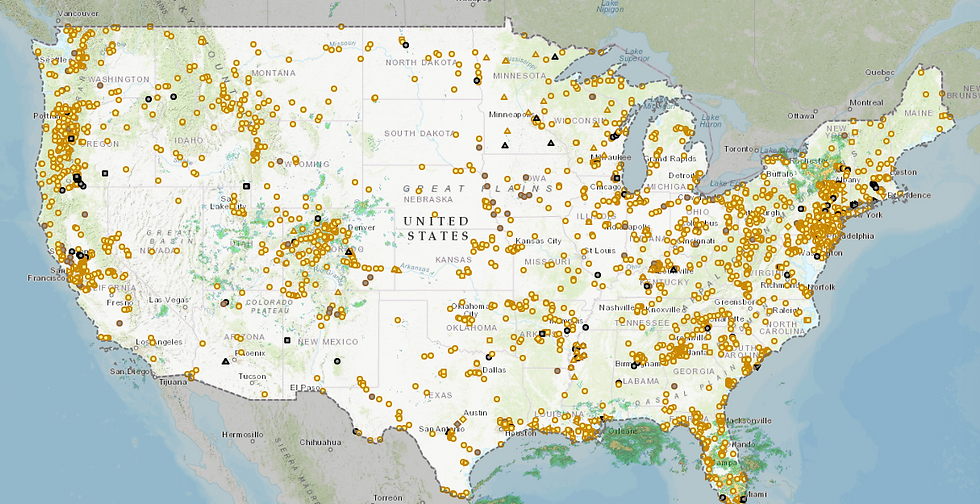
The majority of water sources seem to be either on the West Coast or in the northeast of the United States. This automatically makes me believe that these sections probably have the most unsanitary water, as more water sources in an area probably correlate with a higher proportion of individuals in the area. Anyway, when I clicked dissolved oxygen, I was shocked that there was an unfiltered river that had dissolved oxygen right next to me! Have I been swimming in dirty water? For this experiment, however, I used a water source near Prosper, Texas so that we have only one source to look at. Prosper, TX water source: Temperature: 25.9 Degrees Celsius Discharge: 77.5 Cubic Feet Per Seconds Gage Height: 525.87 Feet Specific Conductance, Water, Unfiltered: 246 Micro Siemens Per Centimeter at 25 degrees Celsius
Dissolved Oxygen, Water, Unfiltered: 7.4 milligrams per liter.
Why did we do this?
As you can tell, all this information is interesting, but what does it have to do with AI? Currently, whenever AI is used in context, many people think of it as a quick tool like Google but more secure and correct. That may be true but AI isn't trustworthy. It is, in fact, immensely dumb.
Whenever we ask ChatGPT a question, there probably have been numerous times where it has gotten an answer wrong. These AI Generators then go to a human source, and whenever it gets it wrong, it is sort of human instinct to get mad at it and tell it that it was wrong. These AI Generators then go to a human source, and once they put in the right answer, they will never get it wrong again.
Although it is a dumb machine right now, in a few years, it will be the smartest ever, as this artificial brain never forgets anything. That is why research has been such an important aspect of our lives, as we want to gain more data to solve more problems, and one problem is something we need in our daily lives: clean water.
How is AI helping with clean water? There have been many innovations that have been made to help treat clean water AI. One of them is none other than Clean Water AI. I don't know if the founders found this humorous or just were uncreative. However, their vision is spectacular. Using this machine, the founders hope that users will be able to see water at a microscopic level to find bacteria, which would be helpful to lower the amount of bacterial infections humans get.
AI is a relatively new subject, but it will be the future. When I saw how unfiltered the water in Prosper, TX (One of the biggest cities in Texas) was, I was shocked. AI can only help solve the issue, but it will also be able to educate millions of people around the world about their water quality, from the slums of India to the mountains of Argentina.


Comments