


How AI is Revolutionizing the Future of Prosthetics and Bionic Limbs
- Abhi Mora
- Nov 19, 2025
- 3 min read

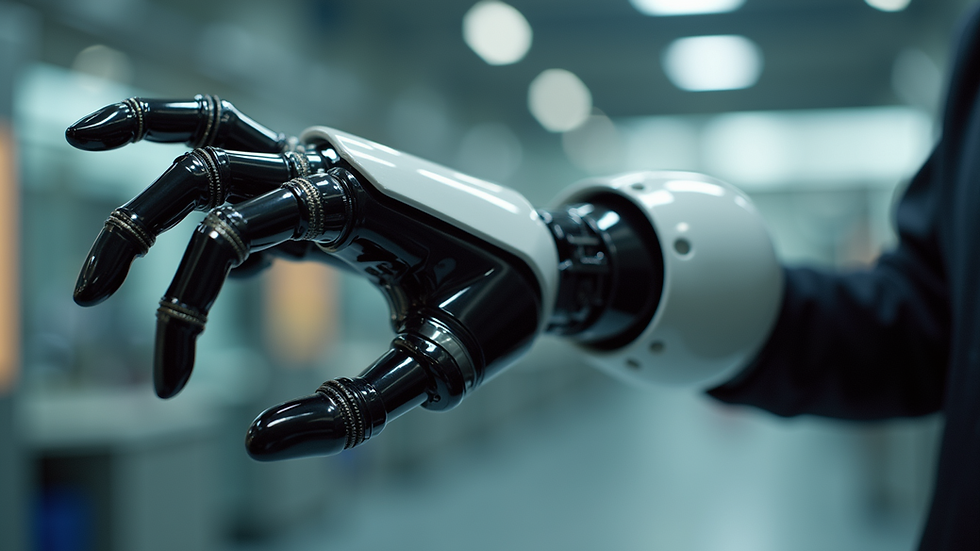
Prosthetics and bionic limbs have evolved dramatically. They are no longer just tools; they have become intelligent extensions of the human body. Thanks to advancements in AI, these devices can now adapt, learn, and respond in real time, significantly improving the lives of users with every step, grip, and gesture.
How AI Enhances Prosthetics
Signal Interpretation
AI uses advanced technologies to decode muscle signals (known as EMG) or nerve impulses. This capability allows prosthetics to predict user intent. For example, if a user wants to pick up a cup, the device can understand this desire and adjust accordingly. Research shows that enhancing signal interpretation can improve movement smoothness and responsiveness by up to 30%.
Adaptive Control
Machine learning algorithms play a critical role in adaptive control. They adjust various parameters such as grip strength, gait, and joint angles based on different factors. Imagine walking on a rocky path; AI algorithms can change the stride and balance in real-time. Such adjustments make navigating challenging environments less daunting, allowing users to tackle everyday tasks effortlessly.
Pattern Learning
AI systems learn from repeated actions to tailor their responses. For instance, by recognizing unique walking styles or hand gestures, the devices can enhance usability. Studies indicate that personalization in prosthetics can improve user satisfaction by as much as 40%. This improved experience fosters a deeper sense of ownership and comfort, as the device aligns more closely with the user's natural movements.
Sensory Feedback Loops
Some AI-enhanced prosthetics simulate sensory experiences like touch, pressure, or temperature. This advanced sensory feedback is crucial for users to feel connected to their prosthetics. For example, with effective feedback loops, a user can sense when they are gripping an object, making interactions with their surroundings more natural and intuitive.
Real-World Innovations
Bionic Arms with AI Grip Control
Innovations such as the LUKE Arm and BrainCo’s bionic arms are impressive examples of AI in action. They can respond to subtle muscle signals, enabling precise manipulation. Users can perform intricate tasks, such as tying shoelaces or picking up small objects, which were previously difficult or impossible. For example, the LUKE Arm can execute over 60 different motions, ensuring versatility and adaptability.
Smart Legs with Terrain Adaptation
Companies like Össur and Ottobock have developed smart legs that use AI to adjust walking patterns based on the terrain. These legs can change stride length and balance dynamically while walking on diverse surfaces—transforming how users experience mobility. For instance, users report feeling more confident with an 80% improvement in their ability to walk on uneven ground.
Neural Interfaces & Brain-Machine Integration
AI is facilitating direct control of prosthetics through brain signals. This groundbreaking technology opens doors for individuals with severe mobility impairments, allowing them to control their limbs with thoughts alone. Studies show a 70% success rate in users being able to control their bionic limbs through thought with minimal training, illustrating the potential of neural interfaces.
Ethical & Social Impact
Accessibility
While advancements in AI can drive down costs and complexity, high-end devices remain inaccessible to many. For instance, a top-tier bionic arm can cost anywhere from $50,000 to $100,000, which is not affordable for all. This gap raises significant questions about equity and the future of prosthetic technology.
Data Privacy
As AI devices collect neural and biometric data, ensuring privacy is critical. Users must feel secure that their personal information is protected. Recent surveys reveal that approximately 80% of users are concerned about their data security. Addressing these concerns is essential to maintaining trust as technology continues to evolve.
Identity & Agency
The intelligent design of bionic limbs raises important discussions about autonomy, enhancement, and what it means to be human. As these devices integrate more deeply into everyday life, we must question how they influence personal identity and agency. For instance, the notion of being "enhanced" versus "restored" can shift societal perceptions, prompting new ethical considerations.
The Path Forward
AI-powered prosthetics aren’t just restoring function; they are redefining it. The fusion of intelligence and embodiment leads us to a future where disability is met with innovation, not limitations. We are only beginning our journey in this exciting field, and the potential for transforming lives is immense.

As we continue to explore the intersection of technology and human ability, the opportunities for enhancing quality of life through AI-powered prosthetics are limitless. The future is bright, and it is time to embrace the transformative change that intelligent bionics brings to our world.
By:
Abhi Mora


Comments