


Soaring Into the Future: How AI-Powered Drones Will Transform Delivery Logistics
- Abhi Mora
- Sep 6, 2025
- 3 min read

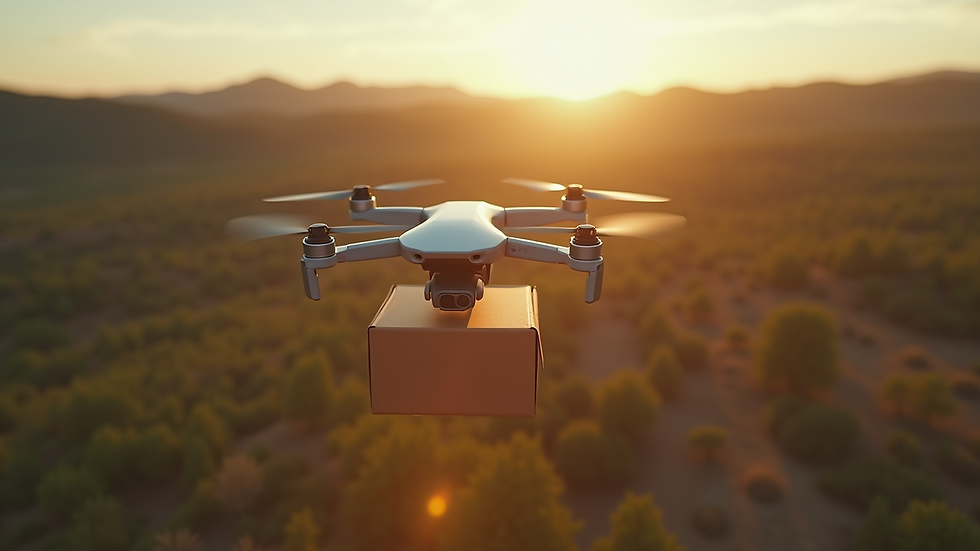
The logistics industry is on the brink of a major revolution thanks to AI-driven drone delivery systems. These advanced flying machines promise to make transporting goods faster, more efficient, and largely autonomous. Top companies like Amazon Prime Air and Drone Express are leading the charge, harnessing cutting-edge AI technology to refine their drone operations. Join us as we explore the exciting world of drone delivery and how it’s poised to change our expectations for logistics.
How AI Enables Drone Delivery
AI is the driving force behind the groundbreaking drone delivery system. Here’s a look at the many ways AI empowers these drones to deliver packages more efficiently and safely.
Obstacle Detection & Collision Avoidance
Navigating crowded urban environments is one of the significant challenges in drone delivery. AI employs image recognition to spot and avoid obstacles like buildings, trees, and even birds. For instance, Amazon's delivery drones can detect objects as small as a basketball from 200 feet away. By using intricate algorithms, these drones analyze their surroundings in real-time, making important decisions. This is vital in busy areas where even small mistakes could have serious consequences.
GPS-Free Navigation
While GPS is often used for navigation, it isn’t always reliable. Factors such as tall buildings or severe weather can interrupt GPS signals. In these situations, AI-driven computer vision allows drones to navigate independently of GPS. For example, Walmart is using advanced visual navigation that enables its drones to pinpoint their locations even in areas where GPS fails. By focusing on visual markers and cues, AI helps drones operate accurately across various environments.
Contingency Management
AI empowers drones with intelligent systems for contingency management. If something malfunctions, these drones can execute emergency landing protocols. For instance, if a drone experiences a battery failure, its AI can engage a safety landing feature, analyzing height and nearby obstacles to ensure a secure drop. This capacity is critical for maintaining a reliable delivery service, safeguarding both the drones and their surroundings.
Delivery Drop Optimization
Delivering a package is not just about arrival; it’s equally important to drop it at the right spot with minimal risk. AI algorithms assess several factors, such as wind speed, flight path, and drop accuracy. For instance, when delivering medical supplies, precise drop locations are crucial for efficiency. By optimizing these parameters, AI can reduce damage risks, improving customer satisfaction as they receive their packages safely.
The Future of AI in Drone Logistics
The uses for AI-powered drones extend well beyond package deliveries. Imagine the possibilities of using drones for transporting medical supplies or for rapid response in emergencies. As AI technology develops, the capabilities of these drones will expand dramatically.
Investments in research and development will lead to cutting-edge advances, paving the way for reliable systems that adapt to real-world conditions. From providing medicines to isolated areas to assisting in rescue operations during disasters, the potential is immense. Statistics suggest that the drone delivery market could surpass $28 billion by 2026, showcasing the growth and importance of this technology in logistics.
As drones become more autonomous, logistic companies can enhance their operations, cutting costs and quickening delivery times significantly. Their speed and flexibility make drones an attractive option for businesses eager to meet customer demands promptly.
The Impact of AI-Driven Drones on Society
While the rise of AI-powered drones offers exciting possibilities, it also raises essential questions about future societal impacts. How will workers adapt to these technological advancements? Will the shift toward automation result in job loss, or will it create new roles in tech-focused industries?
AI-driven drones represent a major change in the logistics landscape, promising greater efficiency along with improved safety and dependability. Nonetheless, discussions involving ethics, safety regulations, and community acceptance are vital in guiding drone delivery’s future.
As technology advances, it remains crucial to balance innovation with human oversight. While drones are capable of performing remarkable tasks, human reviewers in logistics still ensure that deliveries are handled thoughtfully and correctly.
The Path Ahead
AI-powered drones are more than just a tech novelty; they symbolize the future of logistics. By leveraging AI capabilities, companies are redefining how we view delivery services. The fusion of speed, efficiency, and safety creates a thrilling landscape for consumers and businesses alike.
As we embark on this new chapter in logistics, we must ask ourselves: Should AI-powered drones take full control of delivery services, or is it vital to maintain human oversight to ensure these sophisticated systems operate smoothly? One fact is clear—the future of logistics is on the rise, and it promises to be an exhilarating journey.

Author:
Abhi Mora


Comments