


The Rise of AI in Modern Warfare: Transformations and Ethical Dilemmas
- Abhi Mora
- Sep 9, 2025
- 3 min read

Artificial Intelligence (AI) has rapidly evolved from theoretical ideas to practical tools on the battlefield. This change is not just a matter of technology; it is transforming how military conflicts are fought and how power is displayed around the world. As AI becomes more integrated into warfare, it brings notable benefits and raises serious ethical questions, as seen in recent global conflicts.
Ukraine: The AI Battlefield
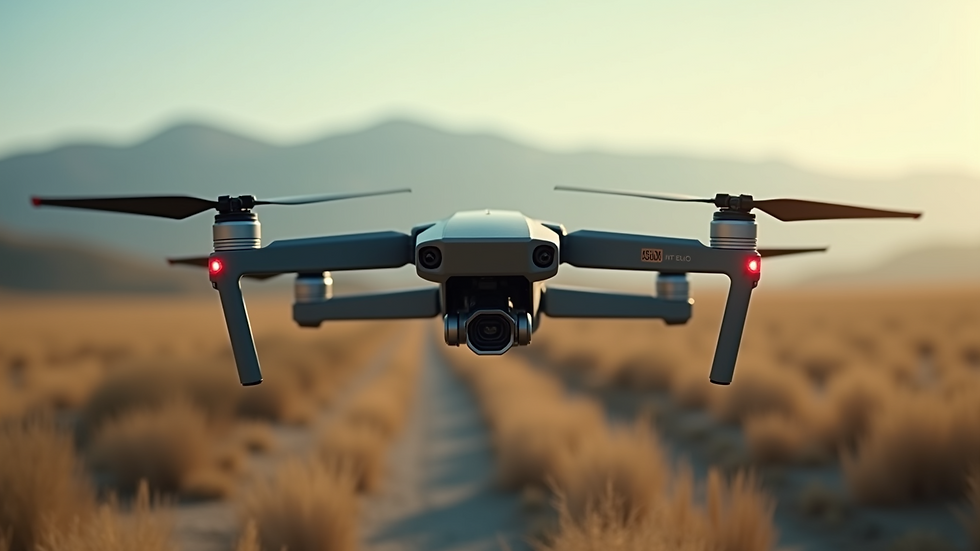
Ukraine stands out as a key example of AI application in combat. In this conflict, autonomous drones have been deployed that can identify and attack targets with minimal human oversight. For instance, these drones have demonstrated their effectiveness in performing reconnaissance missions, providing real-time data that can turn the tide in engagements.
Another interesting innovation is the BAD One, a robot dog designed in the UK. This remarkable machine uses thermal imaging to locate landmines and enemy positions, thus significantly lowering the risk for human soldiers. Moreover, it has the capability to deliver supplies under fire, changing how logistics operate on the front lines.
A noteworthy technology showcased by Ukraine is an AI-powered machine gun. This weapon can autonomously track enemies while still requiring a human to approve a shot. Such developments represent critical moves toward fuller integration of AI in combat scenarios.

Israel: Algorithmic Targeting
During the recent Gaza conflict, Israel used two sophisticated AI systems—Lavender and Habsora—to streamline military targeting. Lavender generated lists of 37,000 individuals identified as potential threats. Habsora broadened the target database to include civilian buildings, raising significant ethical issues. Critics have labeled these systems as a "mass assassination factory," pointing out that the reliance on data could overshadow vital human judgment.
This situation illustrates the danger of relying on algorithms in warfare. Decision-making processes influenced by numbers might lack the compassion and consideration that a human perspective can provide.
Facial Recognition for Justice
China’s AI advancements extend beyond military applications. In investigating war crimes, Ukraine has employed Clearview AI to recognize Russian soldiers at border crossings. This technology uses facial recognition to merge social media data and satellite imagery, helping to build legal cases against individuals who violate international law.
The use of AI in legal contexts highlights the challenges facing modern warfare—it shows how technology can aid in holding individuals accountable, yet it also raises privacy concerns.
Weapon Manufacturing and 3D Printing
AI is playing an increasing role in the manufacturing of weapons. It streamlines factory automation for producing small arms and light weapons (SALWs), which are linked to a substantial share of global violent deaths. For example, reports indicate that small arms are responsible for approximately 60% of all intentional homicides globally. This efficiency raises questions about accountability and how arms are disseminated.
Additionally, the rise of AI-assisted 3D printing enables the creation of unregulated weapons. This development poses significant risks, allowing non-state actors to access advanced armaments with increased ease, which could lead to further destabilization.
China’s AI Commander
In 2024, China introduced a sophisticated AI military commander, capable of simulating large-scale military operations in virtual settings. This technology paves the way for enhanced military strategies and operational planning. By enabling organizations to conduct strategic simulations, military leaders can optimize resource use and tactics without being limited by human constraints.
U.S. AI in Iraq and Syria
The United States has also harnessed AI in its military operations. During missions in Iraq and Syria, the U.S. military trained AI to identify high-value airstrike targets. This approach aimed to reduce human error and improve decision-making efficiency. Reports suggest that targets identified by AI have seen a 15% increase in accuracy compared to traditional methods.
However, the introduction of AI in these life-and-death situations raises ethical uncertainties. Balancing technological progress with considerations of morality remains a critical discussion in military circles.
Looking Ahead
The integration of AI into modern warfare signifies a monumental shift in conflict dynamics and the ethical challenges that accompany it. From Ukraine's autonomous drones to Israel's data-driven targeting, the use of AI technologies yields both operational benefits and significant moral concerns. As these technologies evolve, countries must navigate their implications carefully, weighing military effectiveness against ethical responsibilities.
The future of global conflict is increasingly influenced by algorithms guiding decisions and autonomous machines executing them. This intersection calls for a crucial dialogue about military ethics in an era dominated by technology.
By:
Abhi Mora


Comments